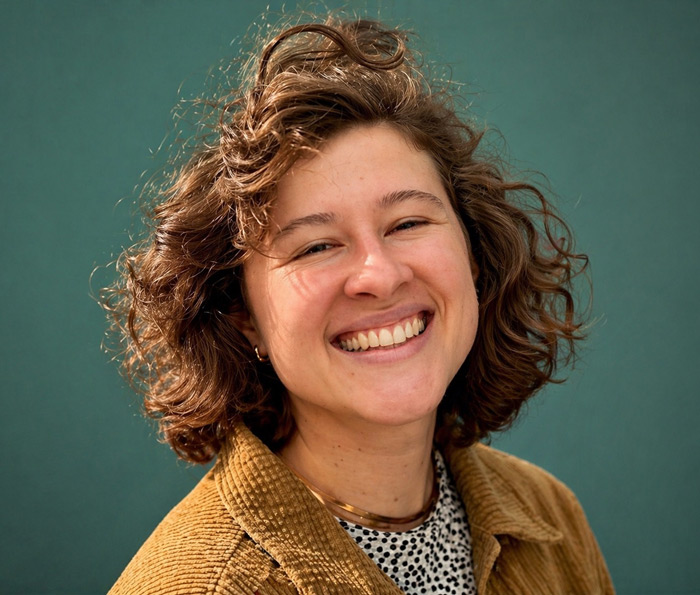
Charlotte Kruger is a Product Owner, a facilitator and someone who brings an almost irrepressible joy to every room she walks into.
With nearly ten years at Entelect and a career that has taken her from software engineering in South Africa to impact banking in the Netherlands, Charlotte has built a reputation for creating the conditions in which other people do their best work. We sat down with her to talk about her journey, her philosophy and what she believes it will take to build a truly inclusive tech industry.
Can you tell us a little bit about what you do and what a typical day looks like for you?
I am a product owner for a mission-driven bank in the Netherlands. They want to be front runners in impact banking, so everything we do, we always ask ourselves: how is this making the world a better place? For people, for the planet, for animals.
I work with the team to maximise value and make sure we are focusing on the things that make the biggest difference.
A typical day involves a lot of meetings, though I would push back on the idea that meetings distract you from real work. I feel meetings are wonderful opportunities to collaborate and get actual work done together. The secret is in facilitating them productively, always being clear on why the session is happening, what needs to be achieved, and who is responsible for what by the end.
I also spend considerable time ensuring alignment across a wide range of stakeholders, making sure no one is left behind and that everyone understands what is coming their way. It is busy, but deeply purposeful.
What motivated or inspired you to pursue a career in tech, and was it always something you wanted to do?
In school, I had IT as a subject and I was one of the few girls in the class. My teacher was a woman as well, and she was just so strong and inspiring. It seemed I had a natural aptitude for it, and alongside that came an awareness of the potential a career in tech could offer, which led me to pursue a bachelor's degree in computing with a major in software engineering.
However, it was during my internship that my path began to shift. I remember thinking: you know what, maybe this isn't for me. Tinkering on other people's code, trying to decipher their intentions, was not where my passion lay. Fortunately, my internship placement gave me the opportunity to do more than just develop. With no one else available to handle the analysis work, I stepped into that space quite naturally. I have a knack for organising, structuring and coordinating, and that exposure to business analysis changed everything.
From there, I made the move from software engineering into business analysis, which is how I came to join Entelect. I was clear about my terms: I would join only if they could support my transition. They agreed, and I found myself in Boot Camp as one of just two BAs in an environment that was heavily geared towards developers. Rather than a setback, I saw it as an opportunity to take initiative and show what I could bring to the table.
I have been with Entelect for nearly ten years now, and the last three have been as a product owner, a role that remains relatively rare within the company.
What has it been like working in the Dutch tech scene? Have you noticed any cultural differences, or things that have surprised you?
One thing that struck me immediately was the attention and respect given to the person behind the work. It is not simply a case of getting things done at any cost. In my experience, there has been a genuine awareness and space for the human element. If someone needs a day to themselves, or is a little distracted, that is understood and accommodated rather than pushed past.
The country itself is also visually stunning and a wonderful place to be. The weather can be the worst sometimes (winter), but as I always say, pick your battles. Nothing is perfect.

Stay Connected
Our monthly newsletter keeps tech professionals informed with insider tech insights, career opportunities, and Entelect updates.
Jobs | Tech News | Memes | Culture
What do you consider your special sauce, the unique perspective or flavour you bring to teams and clients?
Joy and enthusiasm. It is something I get complimented on quite often, which is just the best kind of validation, because it comes so naturally to me. Knowing that people notice it and appreciate it means that it genuinely makes a difference, and that it is not something that is always present in every room.
And then, of course, facilitation. Being the guide and not the hero.
Can you talk about a particularly memorable project or accomplishment in your career, something you still think about and feel proud of?
Facilitation is going to be a recurring theme here! My career highlight takes me to a two-day workshop I facilitated in the Netherlands earlier this year, where our team was working on a complex banking onboarding problem. Rather than lengthy back-and-forth conversations, I guided participants to work things out independently, draw diagrams of what they imagined the flow should look like, and externalise their thinking visually. Working alone together, as I like to call it.
My role has never been about the material. It is about holding space for the people who know what needs to happen and creating a framework for them to work their magic. Watching that shared understanding emerge and come together was deeply rewarding.
If you could give your younger self one piece of career advice, what would it be?
Just be authentic. And if I were to qualify that a little further: you do not always have to apologise for not being everyone's cup of tea, because you simply cannot be. Some people like coffee.
What initiatives or strategies can organisations implement to foster more gender diversity and inclusivity, particularly in the tech space?
Gender diversity in tech is not only about hiring more women. It is about creating an environment where people can genuinely thrive and advance. That means helping colleagues become aware of their own biases, fostering openness and respect for difference, and building communities that actively support women and other underrepresented groups through events, networking and learning opportunities. I am proud that Entelect already walks this talk, with initiatives like ElevateHer, GirlCode and Ladies That Code leading the way.
What do you envision for the future of women in leadership positions in tech, and what role do you hope to play in shaping that future?
I see myself as an amplifier: sharing stories, highlighting best practices and showing through real examples the impact that women in positions of power can have. Mentorship programmes, sponsorship initiatives and clear pathways for career progression all matter, but so does encouraging honest, open dialogue about diversity and inclusion. Bringing different perspectives into boardrooms increases the odds of producing outcomes that reach more people. And frankly, your bottom line is affected by diversity and inclusion. Why would you limit who is in the room creating a product that will ultimately serve an enormously diverse range of people?


